Remote onboarding works when a new hire feels they belong, not just when their tools work. Most remote onboarding programs handle access well: laptops, logins, training, and policies. Where they fall short is connection, which gets left to chance. A 90-day onboarding plan that deliberately builds relationships, through an onboarding buddy, cross-team coffee chats, shared team activities, and a connection check-in at day 90, helps remote and hybrid employees settle in faster and stay longer.
Key Takeaways
- Remote work removes the unplanned moments, like hallway chats and team lunches, that build belonging in an office. Remote onboarding has to design them in on purpose.
- The first few weeks set a new hire's mental model of the team's culture. If onboarding is only tasks, they will assume the culture is too.
- The riskiest point is often around months two and three, when the novelty of remote work fades and isolation can set in.
- A strong remote onboarding plan treats connection as part of the job, with the same planning given to tool access and training.
- Live team games give new hires a low-pressure way to meet colleagues and see real team culture in action.
Day One, Seen From a Home Desk
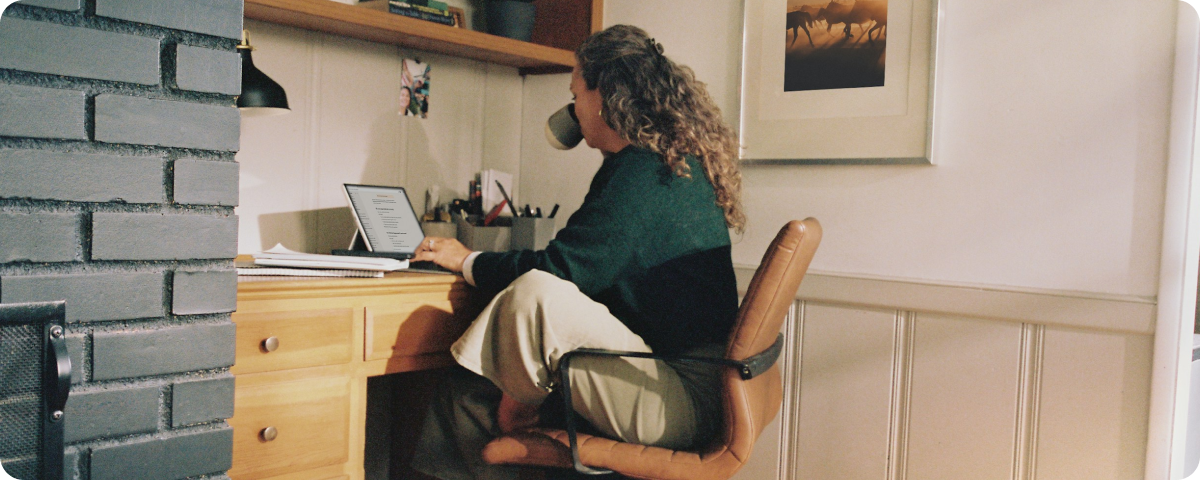
The laptop arrives two days early, neatly boxed. The logins work on the first try. The welcome email lists the tools to install, the policies to read, and the meetings already on the calendar. By lunchtime, everything technical is done.
And yet, by the end of the day, the new hire has spoken to exactly two people: their manager, for fifteen minutes, and someone from IT who helped reset a password.
Nobody took them for coffee. Nobody explained who knows the history of which project, or who tells the best stories at lunch. There was no lunch. There was a quiet room, a glowing screen, and a growing list of unread channels full of inside jokes they didn't understand.
This is what a "smooth" remote onboarding often looks like. Every box gets ticked, and the most important one gets missed entirely: do I belong here?
Why Is Onboarding Where Connection Is Won or Lost?
Onboarding is where connection is won or lost because a new hire's early experiences become their default picture of how the team works, and remote work removes the casual moments that would otherwise correct that picture.
First Impressions Set the Default
In an office, belonging is picked up almost by accident. You overhear a conversation and join in. You get invited to lunch because you happened to be standing nearby. Someone notices you look lost and walks over. None of it is planned, and all of it adds up.
Remote work removes the accidents. What's left is only what someone deliberately designed. That makes the first few weeks unusually important. If the first month is "log in, get tasks, log out," that's the culture a new hire will assume, and quietly adopt.
The Novelty of Remote Work Wears Off
Most new remote hires start out delighted. No commute, no dress code, flexible hours, more time for family. For many people, it genuinely is a better way to work.
But somewhere around the second or third month, the novelty wears off and a different feeling can creep in. Work is getting done, sometimes faster than ever, yet colleagues still feel like names on a screen. Asking for help feels like an imposition. A short message gets read as a cold one. The new hire starts to think, I'll just keep my head down.
That's the moment onboarding either did its job or didn't. A person who built a few real relationships early has somewhere to turn. A person who didn't starts to drift, and drifting is often the first step toward leaving.
Where Does Remote Onboarding Go Wrong?
Remote onboarding usually goes wrong because it is built to solve for access (accounts, tools, documents) and assumes connection will follow on its own. Most programs aren't bad; they're built for the wrong problem. These are the four gaps we see most often.
1. It's a Checklist, Not a Welcome
A checklist tells someone what to do. A welcome tells them who they're doing it with. When onboarding is mostly forms, videos, and handbooks, a new hire can finish the whole thing without a single conversation that isn't about work.
2. The Only Relationship Is With the Manager
Managers matter, but they can't be someone's entire network. New hires need peers they can ask "silly" questions, colleagues from other teams who explain how things really work, and at least one person who checks in just to see how they're doing.
3. Culture Is Described, Never Experienced
"We're a friendly, collaborative team" reads nicely on a slide. It means very little until someone actually laughs with those colleagues, sees how they handle a mistake, or joins a team celebration. Culture is learned by doing, not by reading.
4. Time Zones and Schedules Decide Who Gets Included
Welcome calls and team socials usually happen when most of the team is online, or when the office crowd is in the room. For a new hire several hours away, or a hybrid employee on a home day, that can mean every friendly moment lands at midnight or happens without them. Without meaning to, the schedule tells them they're an afterthought.
A 90-Day Remote Onboarding Plan for Belonging
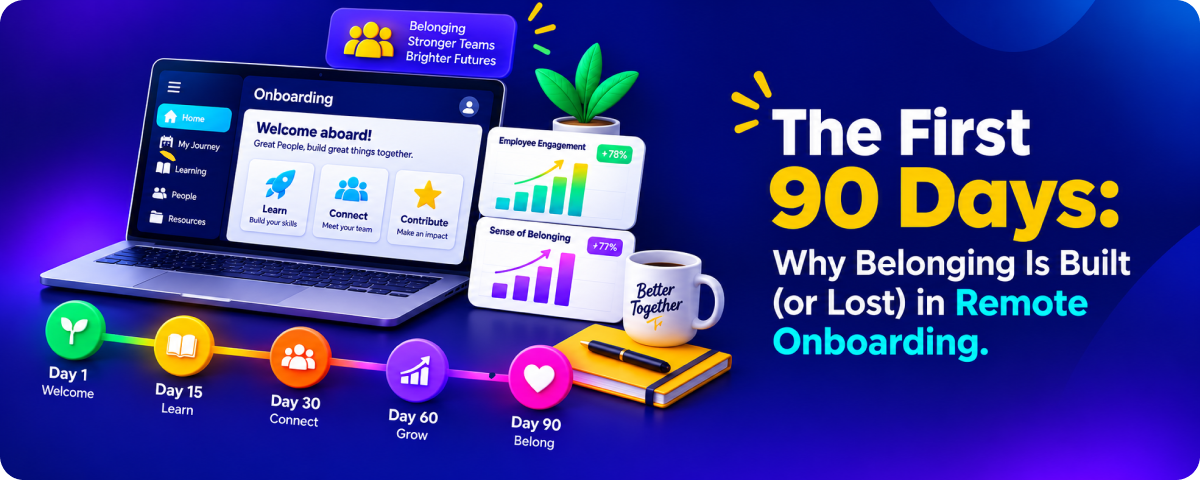
The fix isn't a bigger checklist. It's treating connection as part of the job and planning it across the first 90 days. Here is a simple structure.
Week 1: Make the First Hellos Happen on Purpose
In the first week, the goal is to make sure the new hire meets people, not just systems.
- Assign an onboarding buddy from outside the new hire's immediate team, whose only job is to be friendly and answer the questions nobody puts in a handbook.
- Hold a short team welcome call, cameras on if people are comfortable, where the conversation is about people, not projects.
- Schedule a few 15-minute coffee chats with colleagues across functions.
- Introduce the new hire in a shared channel with a line or two about them, so others have an easy way to say hello.
Month 1: Create Shared Experiences, Not Just Shared Tasks
In the first month, the goal is to give the new hire memories of the team that aren't status updates.
- Invite them to a live team activity or game in their first few weeks, as part of your regular remote team building.
- Open some meetings with a two-minute warm-up that lets everyone talk about something other than work.
- Include them in that month's celebrations, whether it's a birthday, a project win, or a festival, and make remote participation real rather than a line in an announcement.
- Rotate meeting and social times so no single location or time zone always gets the inconvenient slot.
Months 2–3: Check In on Connection, Not Just Performance
By day 90, the goal is to confirm the new hire has a real network and to turn them from guest into member.
- Add one question to the 90-day review: "Who do you feel comfortable going to for help?" If the answer is "just my manager," that's a signal.
- Invite the new hire to host or suggest a team activity.
- Ask what felt missing in their first three months, and feed it into the next person's onboarding.
The goal by day 90 isn't that the new hire knows everyone. It's that they know enough people well enough to feel part of the team.
Why Do Games Belong in Remote Onboarding?
Games belong in remote onboarding because they give new hires a shared goal and something to talk about, which makes meeting new colleagues far less awkward than open-ended introductions.
Games Lower the Stakes of Meeting New People
Walking into a room of strangers is awkward, even when the room is a video call. Being asked to share a "fun fact about yourself" can make it worse. Games solve this quietly. They give everyone a shared goal, a set of rules, and something to talk about that isn't themselves. People relax, and their natural personalities show up without anyone forcing it.
For a new hire, that's gold. In twenty minutes of play they learn who's competitive, who's funny, who helps others when they fall behind, and who they might want to message later. That's the kind of insight that normally takes months of hallway encounters.
Where GameJamm Fits
This is exactly the kind of moment GameJamm was built for. GameJamm is a gamified employee engagement platform for remote and hybrid teams. Teams pick an activity from the game library and play together live, whether that's a welcome session for a new hire, a mixed group from different departments, or a celebration that includes colleagues in every location.
Because every format has a multiplayer layer, new team members aren't just watching. They're talking, listening, and working things out with colleagues in real time. It turns onboarding from something a new hire completes alone into something they experience with the team, and gives HR and people teams a simple, repeatable set of hybrid team activities to build into every onboarding plan.
Frequently Asked Questions
What is remote onboarding?
Remote onboarding is the process of welcoming, training, and integrating a new employee who works away from the office. Good remote onboarding covers both the practical side, such as tools and training, and the social side, such as building relationships and understanding team culture.
Why do new remote employees feel disconnected?
New remote employees feel disconnected because remote work removes the casual conversations and shared spaces that build connection in an office. Unless a team deliberately creates chances to connect, new hires can end up knowing their tasks well but their colleagues barely at all.
How long should remote onboarding last?
Remote onboarding should run for about 90 days. Technical setup may take only a few days, but building a sense of belonging takes longer. A 90-day plan gives new hires time to form real working relationships, not just complete their training.
What are good onboarding activities for remote teams?
Good onboarding activities for remote teams include buddy programs, short cross-team coffee chats, welcome calls focused on people rather than projects, and live team games. The best activities are interactive and scheduled so everyone can join, whatever their time zone or work location.
What does an onboarding buddy do?
An onboarding buddy is a colleague, ideally from outside the new hire's immediate team, who helps them settle in socially. The buddy answers informal questions, explains how things really work, introduces them to others, and checks in regularly during the first few weeks.
How can you tell if a new remote hire feels they belong?
Ask them who they feel comfortable going to for help. If a new hire names several colleagues beyond their manager by their 90-day review, they are building a real network. If they name only their manager, they likely need more deliberate chances to connect.
Final Thoughts
A new hire's laptop can be set up in an afternoon. Their sense of belonging can't. It's built slowly: through a friendly hello on day one, a laugh shared in week two, a celebration they were genuinely part of, and the moment they realize they know exactly who to ask for help.
Remote work gave us flexibility, focus, and freedom. It didn't take away our need for each other; it just made that need easier to overlook. The teams that get remote onboarding right are the ones that stop leaving connection to chance and start designing for it.
Because the first 90 days don't just shape how someone works. They shape whether they stay.
Welcome them well. From anywhere. From day one.